Crawler Tractor vs Wheel Tractor for Paddy and Muddy Fields
Choosing the right tractor for paddy fields and muddy land can make a big difference in farming efficiency. When the soil is wet and soft, some tractors struggle to move forward. Others can maintain better traction and work more effectively.
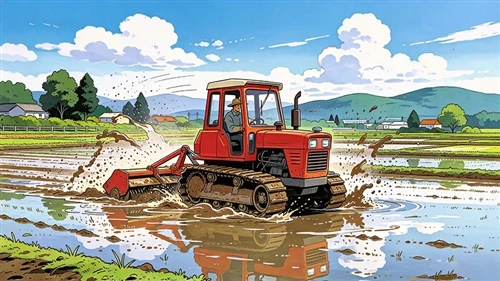
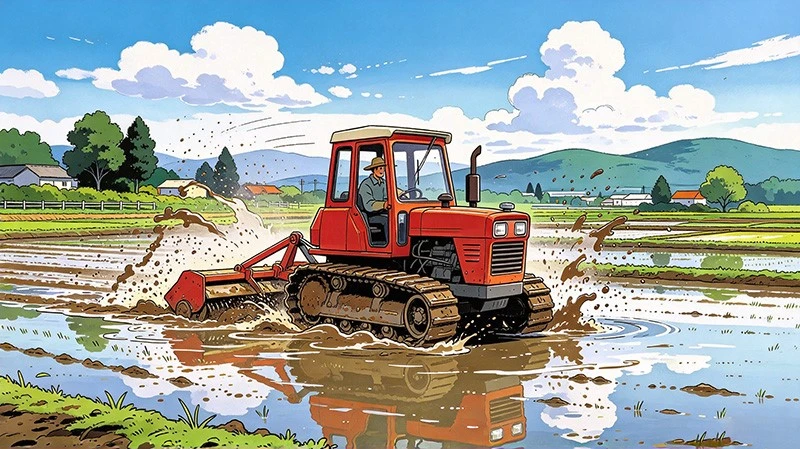
Crawler tractors and wheel tractors have different strengths. Crawler tractors are often a good choice for soft, muddy fields, while wheel tractors are more versatile for farms that combine wet-field work, dry-field cultivation, and transportation.
In this guide, we compare both tractor types, explain how soil conditions affect performance, and help farmers and agricultural machinery distributors choose the right tractor for their needs.
1. What Is the Difference Between a Crawler Tractor and a Wheel Tractor?
The main difference is how each tractor makes contact with the ground.
A crawler tractor uses continuous tracks instead of conventional wheels. These tracks spread the machine's weight over a larger area, helping reduce ground pressure and the risk of sinking into soft soil.
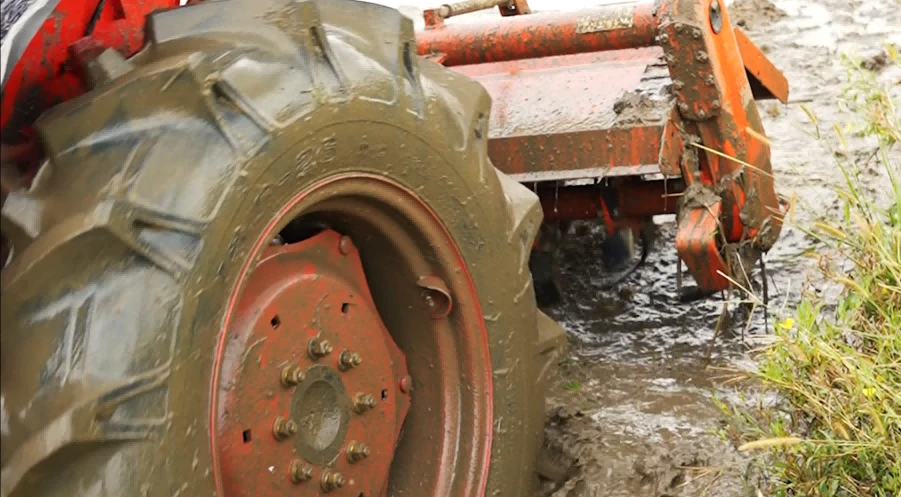
A wheel tractor uses tires to support the machine and transfer power to the ground. Its performance depends on tire design, tire pressure, tractor weight, and the condition of the soil.
These differences become especially important in paddy fields, where wet soil can make it difficult for tractors to maintain traction.
Crawler Tractors for Paddy Fields and Muddy Land
Crawler tractors are designed for applications where traction and support on soft ground are important.
Their main advantages include:
Less sinking in soft soil: Tracks spread the machine's weight over a larger area, which can help the tractor stay closer to the soil surface.
Better traction in mud: Tracks can help the tractor maintain forward movement when conventional tires struggle to grip the ground.
Less wheel slip: A suitable crawler tractor can reduce the traction problems often seen in very wet fields.
Suitable for specialized wet-field work: Depending on the model, crawler tractors can be used for paddy field preparation, puddling, and rotary tillage.
However, not every crawler tractor is designed for flooded rice fields. Buyers should check the track design, ground clearance, sealing, engine power, and the manufacturer's recommendations before choosing a model.
Wheel Tractors for Mixed Farming
Wheel tractors are a practical choice for farms that need one machine for several different jobs.
Their main advantages include:
Versatile field operations: Suitable models can handle tillage, land preparation, hauling, and many other agricultural tasks.
Easier road travel: Wheel tractors are generally more convenient for moving between fields and traveling on roads.
Wide implement selection: Many models can work with rotary tillers, plows, trailers, and other agricultural implements.
Familiar maintenance: In many markets, tires, routine service, and replacement parts are readily available.
The main limitation appears when the soil becomes very soft. Tires may lose grip, spin without moving the tractor forward, or sink into the mud. Four-wheel drive and suitable agricultural tires can improve traction, but they cannot overcome every soil condition.
2. Crawler Tractor vs Wheel Tractor: Key Performance Differences
The following table compares the typical performance of crawler tractors and wheel tractors. Actual results depend on the tractor model, machine weight, track or tire design, soil conditions, and the implement being used.
| Factor | Crawler Tractor | Wheel Tractor |
|---|---|---|
| Ground pressure | Usually lower with a larger track contact area | Depends on tire size, pressure, and axle load |
| Traction in deep mud | Often has an advantage | May experience excessive wheel slip |
| Risk of sinking | Often lower on soft, wet soil | Depends on soil strength and tire configuration |
| Turning | Depends on the steering system and available space | Generally convenient on firm ground |
| Road travel | Often less convenient, especially with steel tracks | Generally better suited to road transportation |
| Mixed farming | Depends on the model and track configuration | Often a versatile choice |
| Maintenance | Requires attention to tracks and undercarriage parts | Requires attention to tires and drivetrain components |
| Typical application | Specialized wet-field and soft-ground work | General farming, transportation, and mixed field operations |
One important point: lower ground pressure does not automatically mean better performance in every situation. A crawler tractor also needs enough engine power, suitable tracks, and the right implement to complete the job efficiently.
3. Which Tractor Is Better for Different Soil Conditions?
Soil moisture affects tractor performance, but moisture percentage alone cannot determine which tractor will work best.
Clay content, soil structure, drainage, and ground strength also matter. Two fields with similar moisture levels can support tractors very differently.
For practical selection, start by looking at how the ground behaves under actual working conditions.
A. When Fields Are Very Wet and Muddy
Recommended option: Consider a crawler tractor designed for wet-field work.
In very wet fields, wheel tractors may struggle to move forward because their tires lose grip or sink into the soil.
A suitable crawler tractor can help improve traction and reduce sinking. This can be useful for paddy field preparation and rotary tillage in soft, muddy conditions.
Before choosing a model, check whether it is suitable for flooded-field operation. Track design, ground clearance, engine power, and implement compatibility are all important.
B. When the Soil Is Wet but Still Firm Enough to Support a Tractor
Recommended option: Compare crawler tractors with suitable four-wheel-drive wheel tractors.
Not every wet field requires a crawler tractor. Some fields remain firm enough for a wheel tractor to work effectively, especially when it has four-wheel drive and suitable agricultural tires.
Before making a decision, consider these questions:
Does the tractor frequently get stuck or lose traction?
Do its tires leave deep ruts in the field?
Does it need to travel between wet paddies and dry land?
Can a suitable wheel tractor complete the work without excessive tire slip?
If a wheel tractor can handle the field reliably, it may be the more versatile choice. If the soil is too soft for consistent wheeled operation, a crawler tractor may be a better fit.

C. When the Soil Is Firm and the Farm Has Both Wet and Dry Fields
Recommended option: A suitable wheel tractor is often the more versatile choice.
When the soil can support the machine, wheel tractors can handle a wide range of agricultural tasks.
They are particularly useful for farms that combine rice cultivation with dry-field crops, hauling, and other general farm work.
The key is to choose a tractor that can handle the farm's most demanding regular operations without limiting its usefulness for other tasks.
4. How to Choose a Crawler Farm Tractor for Muddy Land
When looking for a crawler farm tractor for muddy land, do not choose by engine horsepower alone. The tractor must match the soil conditions, field layout, and implements used on the farm.
Ground Pressure and Track Design
Track width and contact length affect how the tractor's weight is distributed across the ground. A larger contact area can help reduce ground pressure, but the complete track design also matters.
Before purchasing, check:
Track width and contact length
Tractor operating weight
Ground clearance
Track material and undercarriage design
The manufacturer's recommended working conditions
Steel tracks, rubber tracks, and other track configurations have different strengths and limitations. Make sure the selected model is designed for the intended application.
Engine Power and Rotary Tiller Compatibility
If you plan to use a track tractor with a rotary tiller, the tractor and implement must be properly matched.
Check the following specifications:
Rated engine power and engine speed
PTO speed and shaft configuration
Recommended rotary tiller working width
Suitable working depth and operating speed
Hydraulic capacity and lifting capability, where applicable
A wider rotary tiller does not always mean higher productivity. If the implement requires more power than the tractor can provide under actual soil conditions, working efficiency may decrease.
Field Size and Turning Space
Small paddy fields often have narrow entrances, raised field boundaries, and irrigation channels. These features can make turning and moving between plots more difficult.
Before choosing a crawler tractor, consider its overall dimensions, turning method, and ground clearance. A machine that performs well in a large muddy field may be less convenient on a small farm with limited space.
Maintenance and Spare Parts
Maintenance is another important factor, especially for agricultural machinery distributors.
Crawler tractors require attention to track wear, track tension, and undercarriage components. Buyers should check whether replacement parts and technical support are available in their target market.
A tractor should not only perform well in the field. It should also be practical to maintain throughout its working life.
5. Choosing Tractors for Different Farming Regions
Tractor requirements vary between countries and even between nearby farming areas. Rainfall, soil type, field size, crop rotation, transportation needs, and local service support can all affect the best choice.
Crawler Tractor for Cambodia Paddy Fields
Cambodia has extensive rice-growing areas, including lowland fields where seasonal rainfall and water management affect soil conditions.
In fields with soft, wet soil, a suitable crawler tractor may help farmers maintain traction and reduce sinking during land preparation.
However, not all Cambodian rice fields have the same ground conditions. Some farms may benefit from specialized crawler tractors, while others may be better served by versatile wheel tractors.
For distributors, it is important to understand the main needs of local customers before deciding which models to stock.
Crawler Tractor for Small Farms in Uganda
Uganda has diverse farming conditions, from relatively firm cultivated land to wetter areas where soil conditions can limit machinery access.
For small farms, tractor selection should take field size, access routes, crop types, available implements, and maintenance support into account.
A crawler tractor may be suitable for specific soft-ground operations. A wheel tractor may be more practical for farms that need to combine cultivation, transportation, and several other tasks.
The right choice depends on the actual working conditions, not simply the country where the tractor will be used.
Mixed Farming Areas
In areas where farms alternate between wet paddy fields and firmer land, a wheel tractor may be the better option if it can reliably handle the wettest regular operation.
Where soft, saturated soil repeatedly prevents wheel tractors from completing essential fieldwork, a suitable crawler tractor may be worth the investment.
For distributors, matching the tractor to the most common customer requirements is more useful than selecting models based on horsepower alone.
6. Which Tractor Is Suitable for Hilly Terrain Farming?
A crawler tractor can provide good traction on certain uneven or soft surfaces, but it is not automatically the best choice for all hilly farms.
The right tractor depends on the slope, soil strength, ground conditions, machine design, and type of work.
On firm sloping land, a suitable agricultural wheel tractor may be appropriate if the manufacturer approves the intended operation. In some soft or uneven conditions, a suitable crawler tractor may offer advantages.
Safety must come first. Before operating on slopes, check the manufacturer's limits, braking system, rollover protection, and guidance for slope operation. Never use a tractor on slopes beyond its approved operating limits.
7. A Simple Guide to Choosing the Right Tractor
Farmers and agricultural machinery distributors can use the following steps to narrow down their options.
Step 1: Check the soil conditions.
Deep mud and very soft soil: Start by evaluating crawler tractors designed for wet-field work.
Wet but reasonably firm soil: Compare crawler tractors with suitable four-wheel-drive wheel tractors.
Firm soil with occasional wet periods: A suitable wheel tractor may be sufficient.
Step 2: Identify the main farming tasks.
Paddy preparation and wet-field rotary tillage: Look for a tractor designed for the required wet-field conditions.
Mixed cultivation, hauling, and road travel: Consider a wheel tractor if it can handle the field conditions.
Specialized soft-ground work: Compare crawler models based on traction, ground pressure, and implement compatibility.
Step 3: Match the tractor with the implement.
Check engine power, PTO specifications, hydraulic capacity, lifting capability, and implement dimensions before purchasing.
Step 4: Consider operating and maintenance costs.
Look beyond the initial purchase price. Fuel consumption under working load, spare parts, maintenance, transportation, and local service availability all affect the total cost of ownership.
Step 5: Verify performance before making a decision.
Where possible, request real operating videos, technical documentation, or a demonstration under conditions similar to those of the target farm.
This process helps buyers select a tractor based on actual farming needs rather than horsepower or purchase price alone.
8. What to Look for in a Crawler Tractor Supplier or Chinese Tractor Factory
For agricultural machinery distributors, choosing a supplier is about more than comparing quotations. The tractor must suit local farming conditions, customer budgets, implement requirements, and after-sales needs.
When evaluating a crawler tractor supplier or a Chinese tractor factory, consider the following points.
Application guidance: Can the supplier explain which models are suitable for wet paddy fields, soft soil, or mixed farming?
Technical specifications: Are engine power, dimensions, transmission, PTO, and implement requirements clearly documented?
Configuration options: Can the supplier explain the available track or tire configurations and their intended uses?
Spare parts and service: Can the supplier provide information about routine maintenance and recommended replacement parts?
Export support: Can the supplier coordinate product documentation, export requirements, and shipping arrangements?
Product verification: Can the supplier provide genuine product photographs, operating videos, and technical information?
A good supplier should help buyers select the right tractor for their market instead of simply recommending the largest or most powerful model.
Frequently Asked Questions
Which tractor is best for muddy paddy fields?
A crawler tractor designed for wet-field work is often a good option when the soil is very soft and has low bearing capacity. A suitable four-wheel-drive wheel tractor may also work well in moderately wet fields. The final choice depends on the soil, tractor configuration, and implement requirements.
Why are crawler tractors suitable for soft soil?
Crawler tractors spread their weight over a larger contact area, which can reduce average ground pressure. This helps reduce sinking and can improve traction on soft ground. Actual performance depends on track design, tractor weight, and soil conditions.
Can a wheel tractor work in muddy rice fields?
Yes. A wheel tractor can work in muddy rice fields if the soil can support its weight and the tractor has suitable tires and traction. In deeper mud, however, the tires may spin or sink, making fieldwork more difficult.
Is a crawler tractor suitable for a small farm?
It can be a good choice if the farm regularly needs to work in soft, muddy fields. Buyers should also consider field size, turning space, transportation, implement compatibility, and maintenance costs.
Which tractor is suitable for hilly terrain farming?
The right choice depends on the slope, soil conditions, and type of work. Some crawler tractors are suitable for specific uneven surfaces, while agricultural wheel tractors may work well on firm slopes within the manufacturer's limits. Always follow the manufacturer's safety guidance.
What should I check before buying a track tractor with a rotary tiller?
Check the tractor's rated power, PTO specifications, recommended tiller width, working depth, hydraulic capacity, and suitability for the expected soil conditions. The tractor and rotary tiller should be matched to work efficiently as a complete system.
Conclusion
Choosing between a crawler tractor and a wheel tractor starts with understanding the soil and the work that needs to be done.
Crawler tractors can offer important advantages in soft, saturated paddy fields where traction and the risk of sinking are major concerns. Wheel tractors are often more versatile for mixed farming, transportation, and work on firmer land.
For farmers and agricultural machinery distributors, the best choice is the tractor that meets local field requirements while offering practical operating efficiency and manageable maintenance costs.
If you are sourcing agricultural tractors for a specific market, start by identifying the local soil conditions, main farming tasks, field size, and required implements. These details will help you choose a suitable tractor configuration and build a product range around real customer needs.