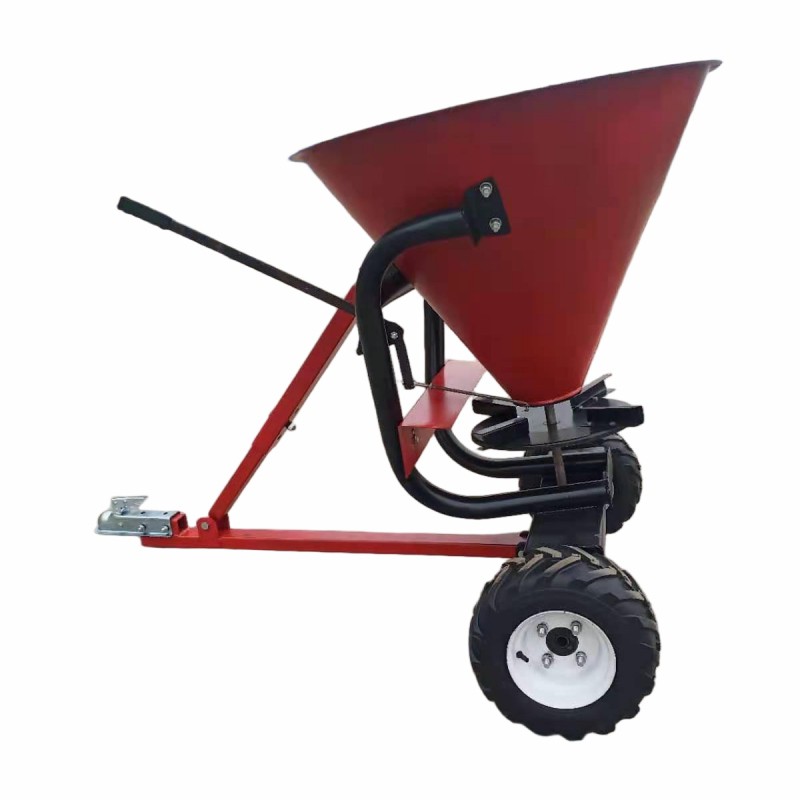
Increase Fertilization Efficiency: Mechanized spreading largely replaces manual work, with operational efficiency reaching 20–30 times that of manual labor. For example, a single fertilizer spreader can work on 60–90 mu per hour, while manual operation only covers about 1–10 mu per day.
Achieve Uniform Fertilization: Through structures such as centrifugal spreader plates, augers, and chains, the fertilizer is distributed evenly, avoiding local over- or under-application, which is beneficial for balanced crop growth.
Improve Fertilizer Utilization: Precise control of fertilizer quantity and depth reduces nutrient loss, increases the efficiency of chemical or organic fertilizers, and lowers the risk of environmental pollution.
Adapt to Various Work Scenarios: Can be used in large fields, orchards, pastures, greenhouses, grasslands, and other terrains, and can even be used for spreading materials like de-icing agents, lime, and distiller's grains.
Reduce Labor Intensity: Automated operation reduces manpower input, improves working conditions, prevents direct human contact with chemical or manure fertilizers, and ensures health safety.
Support Farm Timing Management: Quickly completing fertilization tasks helps seize optimal farming periods and coordinate with the sowing of subsequent crops, contributing to increased annual grain output.
Promote Organic Fertilizer Return to Fields: Encourages the resource utilization of livestock and poultry manure, improves soil structure, enhances water and nutrient retention, and supports the development of green agriculture.